METHODS · 2026-08-12
Rolling Technique: Tight Without Tearing
By Gimbap Curator
Bamboo mat tension, rice thickness, and the sesame oil thumb that stops cracks.
TL;DR
Bamboo mat tension, rice thickness, and the sesame oil thumb that stops cracks.
Thickness policing is half the skill. Spread rice 3–4 mm thick over 80% of the gim, leaving a 2 cm bare strip at the far edge; thicker rice makes rolls that crack when cut and taste rice-heavy rather than balanced.
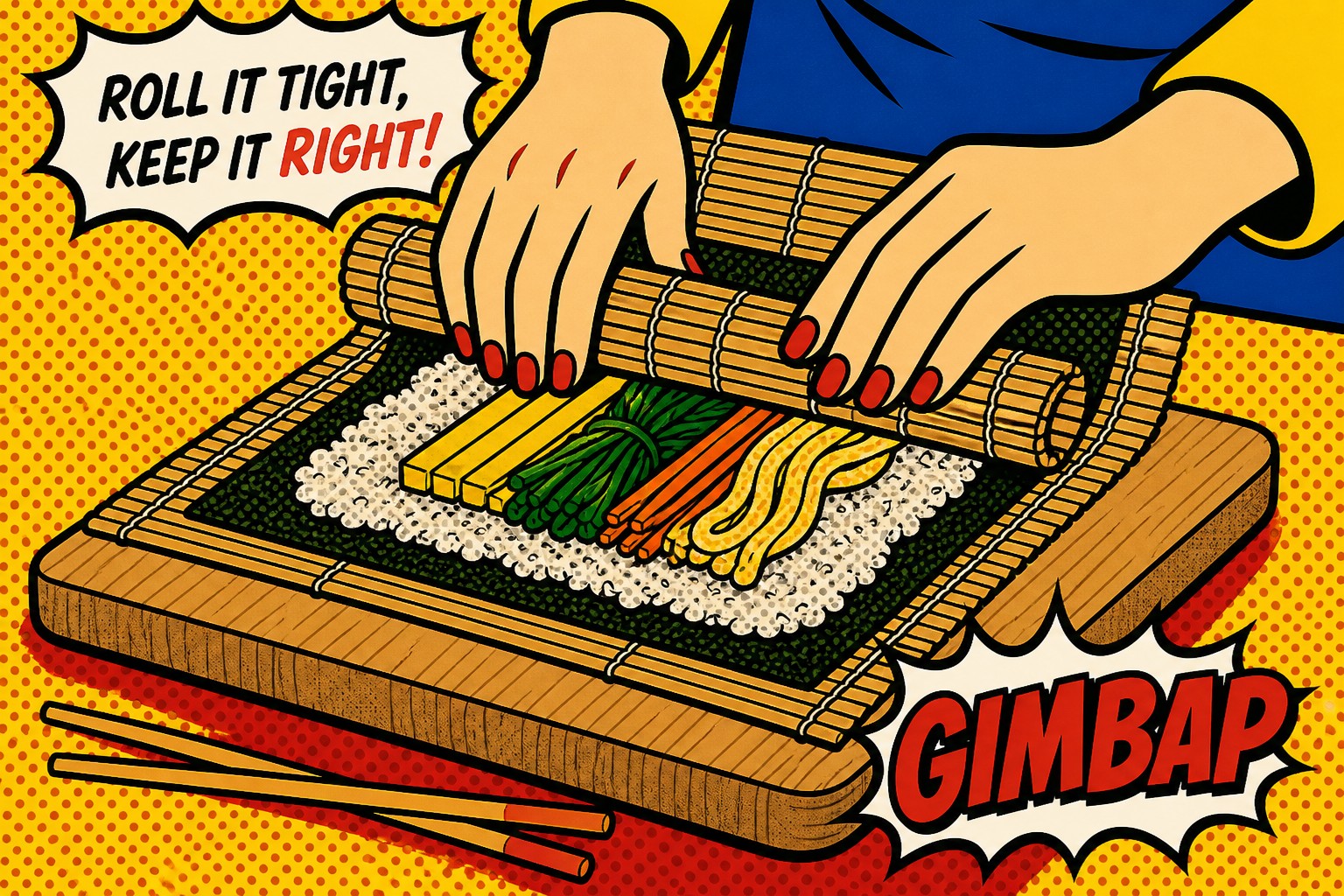
Line fillings in order: protein at center, then two crunchy lines above and below, then greens framing so color shows on the cut face. Lay lines flat, not piled — piled fillings spin inside and escape the ends.
Roll with forward pressure, not squeezing. Fold the near edge over fillings, tuck with fingertips, roll one inch, then use the mat to push forward while pulling the mat back so it never rolls inside — lift the mat fully after each inch. That tuck-and-pull is the motion that prevents air pockets.
Seal with a grain. Dab 2–3 grains of rice at the far edge as edible glue; they steam the gim crisp edge and snag it closed without needing water that makes the seal soggy and unrolling under knife pressure late.
Rest seam-down 2 minutes before cutting. That brief rest lets residual heat seal the seaweed and relax tension so the first slice does not burst. Slice with a wet blade and long single strokes, not sawing — sawed gimbap drags filings and smears rice.
Across the Kimchee Network
More from the Kimchee Network