METHODS · 2026-08-09
Perfect Gimbap Rice and Buying Gim
By Gimbap Curator
Medium-grain rice, slightly less water, and sesame oil — plus how to tell good gim from brittle souvenir gim.
TL;DR
Medium-grain rice, slightly less water, and sesame oil — plus how to tell good gim from brittle souvenir gim.
Cook short-grain rice with 10% less water than you would for bibimbap so grains stay distinct not baby-food soft; spread hot rice on a tray, fan, season with 1 tsp sesame oil and 1/4 tsp salt per 2 cups cooked rice, and use while warm but not steaming — hot rice wilts gim and makes it chewy.
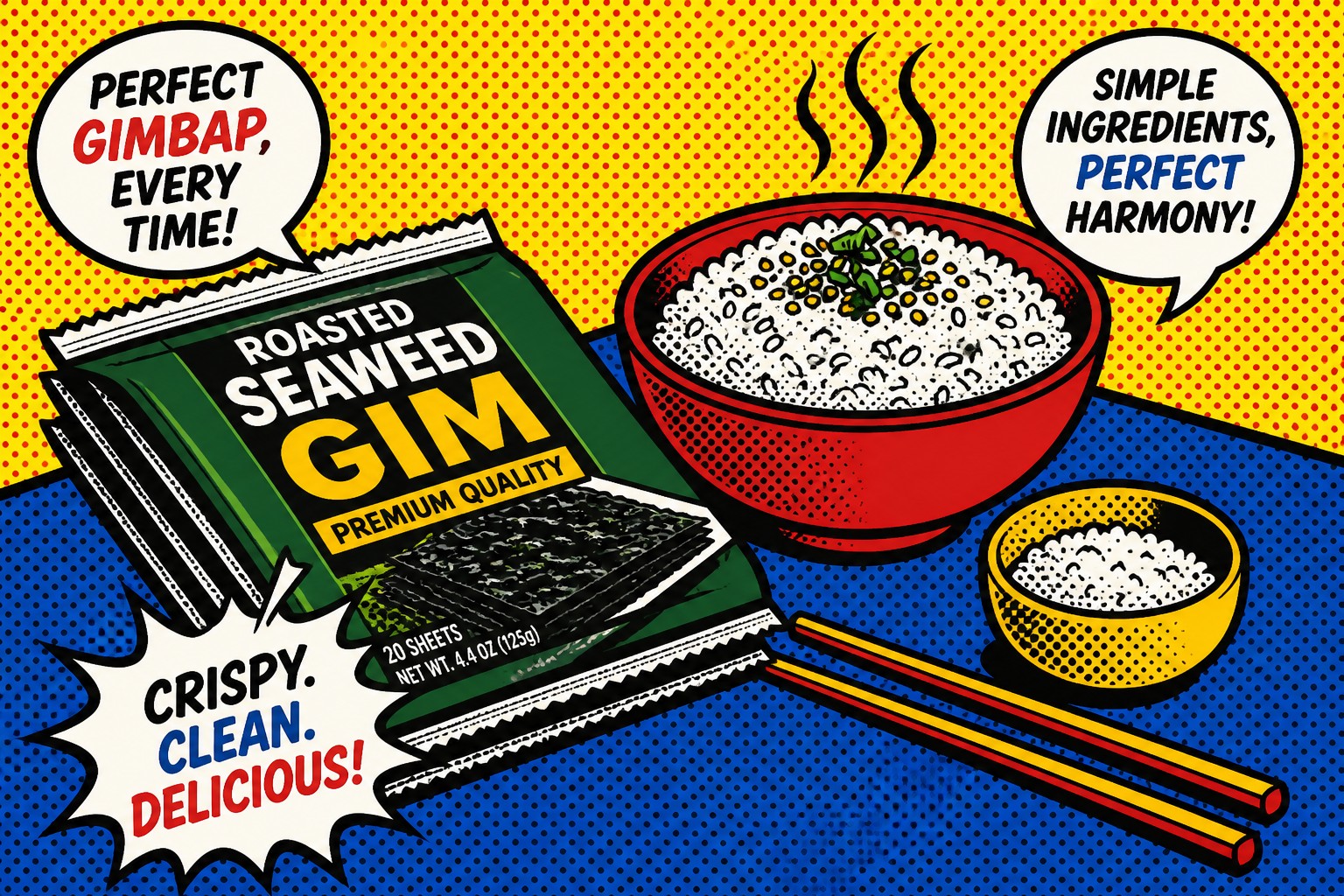
Gim quality: good gimbap gim is thick enough to hold fillings without cracking, dark emerald, and smells like clean sea, not cardboard. Hold it to light — uniform color without pale freckles indicates intact sheet; brittle, pale sheets flake into the roll and taste stale.
Before rolling, brush gim very lightly with sesame oil and wave gently over a low gas flame 2 seconds per side to revive pliability; skip this if your gim is already oil-toasted. Over-oiling makes slices slide and fillings spin inside.
Store gim airtight with silica packet; it humidifies faster than you think. If sheets feel leathery, toast 90 seconds in a low oven rather than frying — fry-oiling good gim is wasteful and makes it greasy.
Gluten or oil-restricted cooks can brush with perilla oil instead of sesame; flavor shifts grassier, so season rice a touch more generously to compensate. Perilla aroma is beloved but divisive — label for guests.
Across the Kimchee Network
More from the Kimchee Network