GUIDE · 2026-08-08
Gimbap vs. Sushi: Similar Roll, Different Logic
By Gimbap Curator
Seaweed-wrapped rolls are not interchangeable — rice seasoning, filling logic, and serving temperature split gimbap from sushi.
TL;DR
Seaweed-wrapped rolls are not interchangeable — rice seasoning, filling logic, and serving temperature split gimbap from sushi.
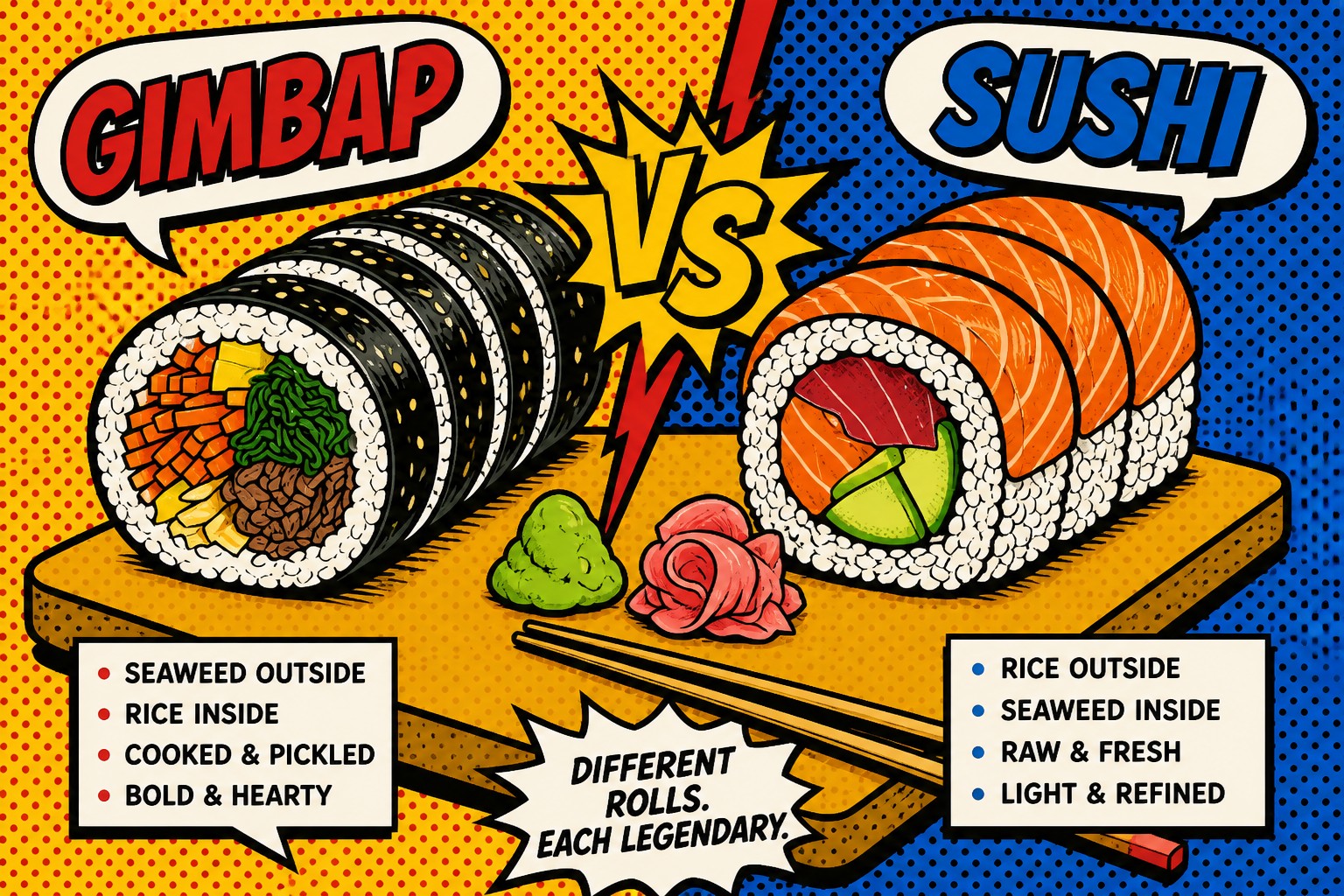
Gimbap rice is seasoned with sesame oil and salt, not sweet vinegar. That subtle, nutty seasoning lets side flavors (ham, tuna, braised beef) sing without sour competing; sushi rice uses vinegar-sugar for its own brightness to complement raw fish. Taste both rice plain — the seasoning tells you the cuisine before you add fish or bulgogi.
Fillings follow opposite philosophies: gimbap packs 5–7 cooked ingredients (spinach, carrot, danmuji, egg, ham, fish cake, crab) arranged in a flat mat so each bite has variety; sushi often isolates one main (tuna, uni, tamago) to highlight that ingredient's own quality. Gimbap is orchestral, sushi is soloist.
Serving temperature differs too. Gimbap is room-temp dosirak food meant to hold; sushi is best slightly cool and immediate. That explains why gimbap travels and picnics well while sushi deteriorates faster outside refrigeration.
Seaweed handling separates them as well: gimbap seaweed is brushed lightly with sesame oil and toasted for pliability; sushi nori is used drier and snappier. The gloss on gimbap is intentional — it prevents cracking when rolled and sliced.
Both are legitimate crafts. Choose gimbap when you want a balanced portable lunch with many textures; choose sushi when you want to study one seafood ingredient. Direct ranking between them is like ranking sandwiches against sashimi.
Across the Kimchee Network
More from the Kimchee Network